
Wooden hair forks are becoming increasingly popular among women looking for natural and long-lasting hair accessories. Unlike plastic or metal alternatives, wooden forks hold hair gently, do not cause static electricity, and are perfect for various hairstyle types. A single wooden hair fork is all it takes to hold a bun in place all day — this guide shows how to choose the right one.
What is a wooden hair fork?
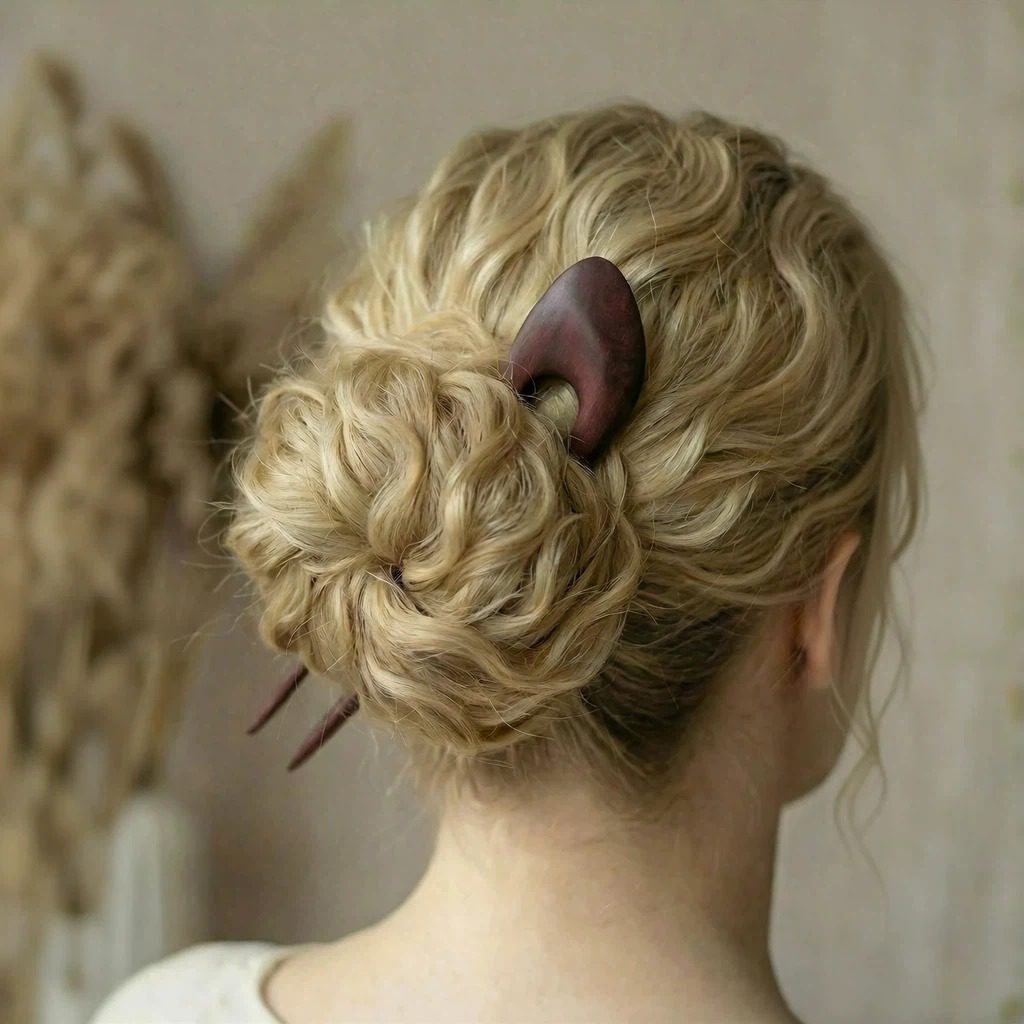
A wooden hair fork is a simple two-pronged accessory that holds a bun or twist in place with tension alone — no elastic, no clasp, no metal spring to snag or snap. You gather your hair into a bun, push the fork through, give it a small twist, and it stays put all day. Because a single wooden hair fork has no moving parts, there is nothing to break and nothing to tug at your hair when you take it out.
Why Choose Wooden Hair Forks?
Gentleness for Hair
Metal forks often have sharp edges that can damage hair. Plastic forks cause static. Wooden hair forks solve both problems — they are gentle and do not create static.
Naturalness and Ecology
Made from FSC-certified wood. After many years, a wooden fork can be composted — 100% natural material.
Longevity
At the MDstore workshop, we work only with hardwood species — cherry, walnut, sapele redwood, padauk, wenge, amaranth, and rosewood.
How to choose a wooden hair fork
Choosing the right wooden hair fork comes down to four things: the number of prongs, the length, the wood, and the finish.
- Fine or straight hair — a slim two-prong fork (or a single-prong hair stick)
- Thick or heavy hair — a two- or three-prong fork
- Curly or wavy hair — a fork with wider prong spacing
Two prongs vs. three
Most of our hair forks have two prongs, which suit the widest range of hair types and hold a classic bun securely. Three-prong forks spread the weight over a larger area and can feel more secure in very thick or heavy hair, but they take a little more practice to place.
Match the length to your hair
As a rule, the thicker and longer your hair, the longer the fork you need. A fork that is too short will not pass through a large bun and will slip out; a well-matched one glides through and locks in place. If you are between sizes, choose the longer fork.
Choose the wood for look and weight
All of our woods are dense hardwoods, so they stay strong even at slim dimensions. Lighter woods such as cherry and sapele keep the fork feather-light for fine hair, while denser, darker woods like walnut, wenge and padauk add a little weight that helps a heavy bun stay put. Beyond that it is a question of colour — compare every species in our wood guide.
Finish and comfort
Every wooden hair fork we make is sanded smooth and finished only with natural oils and beeswax — no varnish or plastic coating — so the prongs slide through hair without catching and feel warm to the touch.
Wood Types
Cherry Wood
- Colour: warm, light brown with pinkish tones
- Subtle, gentle sheen
- Prices: from 12–18 EUR
Walnut
- Colour: dark brown with black grain
- Contrasting, expressive pattern
- Prices: from 16–22 EUR
Redwood (Sapele)
- Colour: warm red-brown with golden tones
- Subtle sheen, elegant
- Prices: from 12–18 EUR
Padauk
- Colour: bright orange-red to deep burgundy
- Vibrant, eye-catching
- Prices: from 16–22 EUR
Amaranth
- Colour: purple-violet
- One of the rarest woods in the world
- Prices: from 16–22 EUR
How to use a wooden hair fork
Twist your hair into a loose bun and hold it against your head. Push the fork straight into the base of the bun until the prongs almost come out the other side, then rotate the fork a quarter-turn downwards and slide it up under the bun. That change of direction is what locks it — the small twist is the whole trick, and it takes only a few tries to master.
How to care for a wooden hair fork
Keep your wooden hair fork dry — do not soak it or leave it in a steamy bathroom. Wipe it with a soft cloth, and once or twice a year rub in a drop of natural oil (coconut, almond or a dedicated wood oil) to stop the grain from drying out. Cared for this way, a single fork will easily last a lifetime of daily use.
Frequently asked questions about wooden hair forks
Will a wooden hair fork hold thick or heavy hair?
Yes — that is what a hair fork does best. For very thick or long hair, choose a longer two- or three-prong fork in a denser wood such as walnut or wenge for extra hold.
Does a wooden hair fork damage or break hair?
No. Because it holds hair with gentle tension rather than a tight elastic or a metal spring, a wooden hair fork causes far less breakage and leaves no crease — and the oiled wood will not create static the way plastic does.
What is the difference between a hair fork and a hair stick?
A hair stick is a single prong; a hair fork has two or more. The extra prong makes a fork easier to place and more secure, especially in fine or slippery hair.
Ready to pick one? Browse our handmade wooden hair forks, each cut and finished to order in our workshop in eastern Lithuania.

